How strong is strong? The Lefevre Threat Level Scale
One ladder, ten ranks, from Civilian to Cosmic. What each rank means, and what one full blast from each does to a house.
In a world with powers, people need a way to say how dangerous someone is. In the game that is the Lefevre Threat Level Scale: ten ranks, from an ordinary person to someone who can crack a world. In the game
- 1CivilianAn ordinary personScratched
- 2TrainedSoldier, cop, athlete: training and gearScratched
- 3ExceptionalThe best a human body can beDented
- 4EnhancedPast human: the experiment workedHoled
- 5SuperhumanHoles a brick wall, shrugs off bulletsHoled
- 6ApexSplits rock; top of the street-level worldBreached
- 7DemigodCraters rockWrecked
- 8CataclysmicBreaks a hillWrecked
- 9PlanetaryLevels a mountainGutted
- 10CosmicCracks a worldLeveled
How you get your rank
Your rank comes from your Strength, out of 100, in bands of ten. Strength up to 10 is rank 1, 61 to 70 is rank 7, and 91 to 100 is rank 10, the strongest there is.
Rank 7 is Demigod
Demigod is where the scale stops being about people and starts being about terrain. A Demigod craters rock. One full blast wrecks a house. Every rank from here up is a disaster for the city it happens in.
The house test
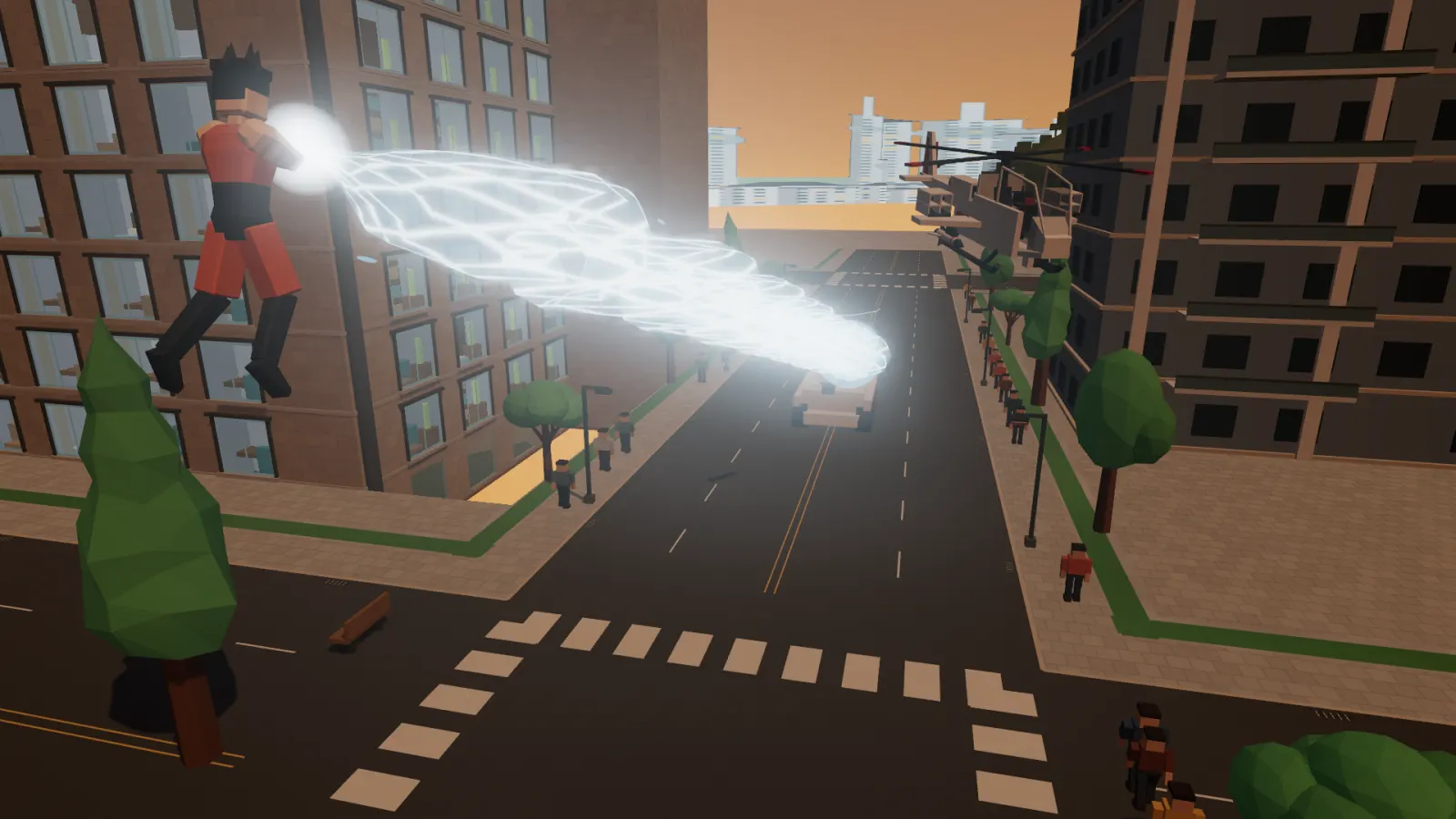
To keep the ranks honest, every rank is measured the same way: one full-charge blast against a one-story house. At rank 1 the wall is scratched. At rank 6 the house is breached. At rank 10 nothing is left standing. The game checks these results, so a rank cannot drift.
Civilian comes first
Civilian is not the bottom of the scale. It is the reason for it.
from Lefevre: A Life, a biography you can find on bookshelves in the game
Every rank above 1 is measured against an ordinary person. That is the point of the whole scale.